No Budget, No Problem: How Bangalore's Bedroom Producers Are Making Hits From Their Apartments
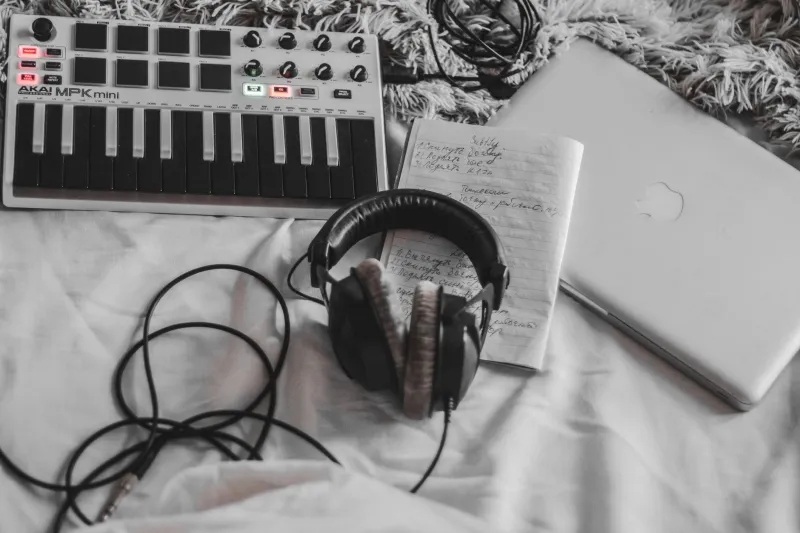
There's a running joke among Bangalore's independent music scene: the best studio in the city doesn't have a reception desk. It has a bunk bed, three foam panels taped to the wall, and a laptop running on its last battery bar. And somehow, the music coming out of these spaces is genuinely, embarrassingly good.
I've been paying attention to this city's underground production scene for a while now, and what's happening here isn't just impressive — it's a full-on blueprint for how musicians everywhere, including those grinding it out in places like Austin, Atlanta, or Portland, can rethink what it actually takes to make professional-quality music. Spoiler: it's a lot less than you've been told.
The Gear List That Will Surprise You
Let's start with the hardware, because this is where most US producers expect the conversation to fall apart. Surely, you need a $3,000 interface, a proper mixing console, and a vocal booth that doesn't double as your closet, right?
Not according to Arjun Menon, a 24-year-old producer from Indiranagar who's placed tracks with three independent labels in the last two years. His entire setup cost him the equivalent of about $600 USD.
"I run a Focusrite Scarlett Solo, a pair of Audio-Technica ATH-M50x headphones, and a Blue Yeti mic I picked up secondhand," he told me over a video call, his room visible behind him — small, tidy, with moving blankets pinned above his desk. "That's genuinely it. Everything else is software."
His go-to digital audio workstation is Reaper, which runs about $60 for an individual license — a fraction of what Pro Tools or Logic Pro costs. He supplements it with free plugins from sites like Plugin Boutique and Bedroom Producers Blog, names that US indie producers will already recognize. The point isn't that he's using secret tools. The point is that he's using the same tools available to everyone and simply refusing to let budget be an excuse.
Open-Source Everything
One of the defining characteristics of Bangalore's bedroom producer scene is a deep, almost philosophical commitment to open-source software. This isn't just about saving money — it's a cultural stance.
Producer and sound designer Keerthi Rao, who goes by the alias KRTHI online, has built an entire workflow around free and open-source tools. She uses LMMS as her primary DAW, layers in samples from Freesound.org, and does her mastering with Loudness Penalty and free versions of iZotope tools.
"People hear my stuff and ask what plugins I'm using, expecting some crazy answer," she laughed. "And I tell them: mostly free stuff. The craft is in how you use it, not what you paid for it."
For US producers who've been eyeing expensive software upgrades, this is worth sitting with. KRTHI's tracks — lush, textured electronic pieces with South Indian classical influences woven through them — genuinely don't sound like they were made on a budget. They sound intentional. Because they are.
Cloud Collaboration Is the Real Game-Changer
Here's where things get really interesting for the US market. Bangalore's producers aren't just making music in isolation — they're collaborating across cities, countries, and time zones using cloud-based tools that have completely flattened the geography of music production.
Platforms like Splice, BandLab, and even simple shared Google Drive folders are standard parts of these producers' workflows. Arjun recently co-produced a track with a vocalist in Lagos and a guitarist in Manchester, all without anyone being in the same room — or even the same hemisphere.
"The collaboration tools are so good now that physical distance is almost irrelevant," he said. "I'll drop a stem on Splice, someone in another country will add their part, send it back, and we'll go back and forth until it's done. It's just normal at this point."
For US musicians, this should feel like an open door. If you've been waiting for the right person to walk into your local scene, consider that the right collaborator might already be working in Bangalore — or Berlin, or São Paulo — and all it takes is a shared project file to start something real.
Acoustic Treatment on a Shoestring
One of the biggest concerns for home studio setups is acoustics, and this is where Bangalore producers have gotten genuinely creative. Real acoustic panels are expensive. Professional treatment for a room can run thousands of dollars. So what do you do?
You improvise, and you do it well.
KRTHI's solution: a recording corner built from a mattress propped against the wall, a ring of bookshelves filled with books (irregular surfaces break up sound reflections), and a duvet hung from the ceiling on a tension rod. It looks a little chaotic in photos. It works surprisingly well in practice.
"Books are amazing acoustic diffusers," she explained. "Nobody talks about this enough. Fill a bookshelf, put it behind your recording position, and you've already solved half your reflection problems for free."
Arjun takes a different approach, doing most of his vocal recording late at night when the city quiets down, and leaning into close-mic techniques that minimize room sound in the first place. Both strategies are low-cost, high-effectiveness — and both are completely replicable in a New York apartment or a Chicago studio share.
The Mindset Shift US Producers Need
I think the biggest takeaway from Bangalore's bedroom producer scene isn't actually about gear or software. It's about mindset.
These producers aren't waiting for better equipment, a bigger budget, or a label deal to start making serious music. They're making serious music right now, with what they have, and letting the quality of the work speak for itself. The results — tracks landing on playlists, collaborations with international artists, growing fanbases built entirely through streaming and social media — suggest the strategy is working.
For US musicians who've been told they need to invest heavily before they can compete, Bangalore's bedroom producers are a pretty compelling counter-argument. The barrier to entry in music production has never been lower. The tools are there. The community is global. The only thing missing is the decision to start.
Quick-Start Checklist for US Producers Going DIY
If you're ready to take some notes from Bangalore's underground, here's a stripped-down starter kit inspired by what these producers actually use:
- DAW: Reaper ($60 license) or LMMS (free)
- Audio Interface: Focusrite Scarlett Solo (~$120)
- Headphones: Audio-Technica ATH-M50x (
$150) or Sony MDR-7506 ($100) - Mic: Blue Yeti or Samson Q2U for vocals (~$50–$130)
- Acoustic Treatment: Bookshelves, moving blankets, a duvet — seriously
- Collaboration: Splice, BandLab, or shared cloud storage
- Free Plugins: Bedroom Producers Blog, Plugin Boutique free section, Freesound.org for samples
Total cost: somewhere between $300 and $600, depending on what you already own.
Not bad for a setup that's producing chart-ready tracks on the other side of the world.
Bangalore's bedroom producers aren't waiting for permission. Maybe you shouldn't be either.