Your Hoodie Is a Focus Group: How Bangalore Artists Read American Fans Before the Streams Do
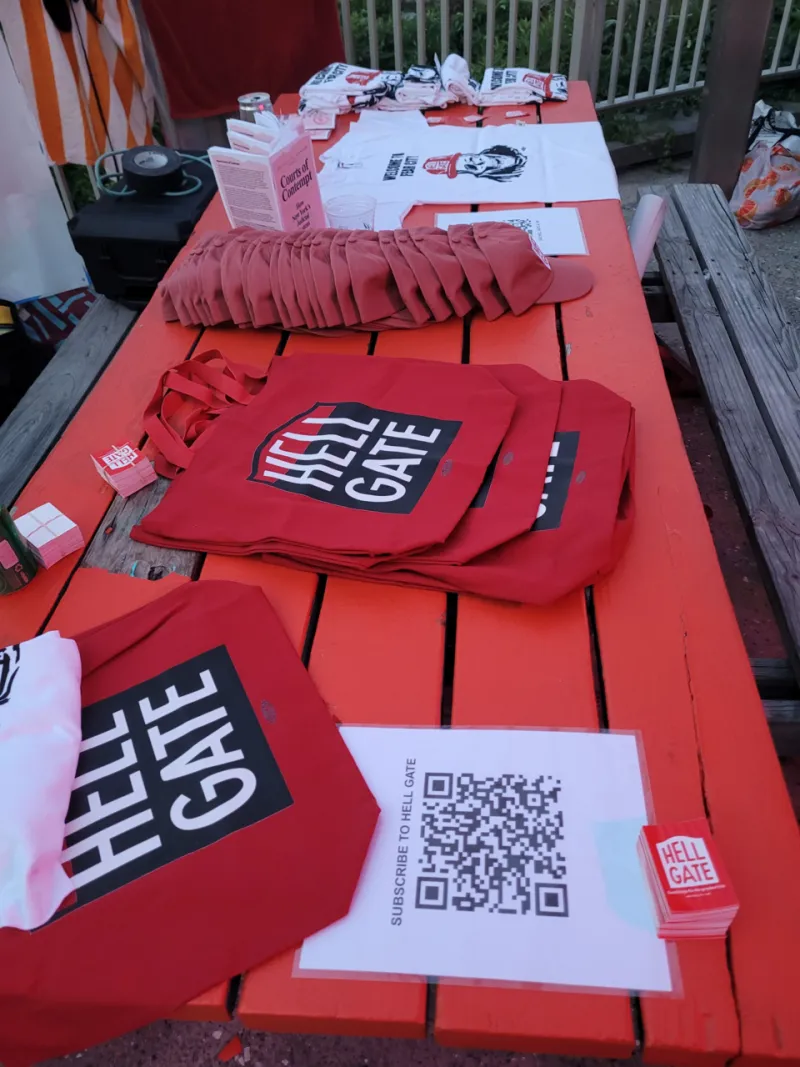
Photo: Sumanah, CC BY-SA 4.0, via Wikimedia Commons
The merch table is the least glamorous object in the music business and the most honest. It doesn't care about your rollout plan. It doesn't know what your streaming service thinks of you. It just records, in cash and card taps, what a hundred people in a room in Chicago actually decided to spend money on at 10:45 p.m. on a Tuesday.
A growing number of Bangalore artists who've started routing through North America have figured out that this is a research instrument. Not a souvenir stand. A focus group that pays you.
What a Table Tells You That a Dashboard Can't
Streaming data is great at telling you where people are listening. It's terrible at telling you why, or what they'd do next. A play in a playlist might be a fan, a curious skip, a gym queue, or a bot farm in a country you've never visited.
A person handing over $35 for a shirt is none of those things. They stood in a room. They heard the set. They walked to the back. They chose a design.
Bangalore artists who've done US runs describe the same discovery: the table reflects the room, and the room reflects a city's specific taste. The same artist can sell out of a specific tee in Philadelphia and barely move it in Austin, and that difference is information you can't get from a monthly listener count.
The City-by-City Ledger
The artists doing this well aren't doing anything fancy. They keep a spreadsheet. Columns: city, venue capacity, headcount estimate, units sold per design, size breakdown, bundle take-rate, and a free-text field for what people said.
That last column turns out to be the important one. Someone asks if there's a version without the logo. Someone asks whether the poster is a screen print. Someone asks where the sample came from, and the answer becomes a caption, a video, a whole piece of content.
Run three or four US dates and the ledger starts to argue with the analytics. Maybe the artist's strongest city on streaming is a market where they sold nine shirts. Maybe a city with modest streams turned out to be the one where the vinyl pre-order actually converted.
The $5 Test and Other Cheap Experiments
Merch culture in Bangalore's scene grew up with limited inventory. You couldn't afford to print 500 of anything on a guess, so you printed 40 and watched. That instinct translates directly to a US tour.
Practical things artists are doing right now:
- Print small, test wide. Two or three designs at low quantity beat one design at volume for a first US run.
- Watch the hands, not the eyes. Which design gets picked up and turned over is a different signal than which one gets bought.
- Price one absurd item. A $5 sticker pack or a cheap patch functions as a low-friction transaction. It tells you who's willing to buy at all, which is a different question than who'll spend $40.
- Write down every question you get asked. Repeated questions are unbuilt products. Three people asking for a specific size means a size chart problem, not three random people.
- Note the accent. Indian-American fans stopping by the table with family in tow are a real audience segment, and they tend to buy differently — often more, often in multiples, often with a story attached.
Why US Promoters and Labels Are Starting to Care
A promoter's job is to decide whether to bring an artist back and at what guarantee. A label's job is to decide where to spend. Both of those decisions are usually made on streaming geography, which is a lagging and increasingly noisy indicator.
Merch data is smaller but sharper. It's a census of the most committed slice of an audience, gathered in the one place where they've already proven they'll leave the house.
A few US promoters who've worked with Indian touring acts have started asking for the table numbers directly, because they answer a question no dashboard can: does this artist's audience buy, or just listen? Those are different businesses. One supports a headline tour. The other supports a feature placement.
For Bangalore artists, this flips the usual power dynamic. In a meeting with a US label, streaming numbers are something you're asking them to interpret. Merch records are something you're showing them.
A No-Algorithm Checklist
If you're an artist trying to read an audience without leaning on platform data, here's a stripped-down version of what's working:
- Track by city, not by tour. Aggregate numbers hide the only signal that matters.
- Record sellouts, not just sales. A design that sold out at 60% of the room is a stronger signal than one that moved 200 units across four nights.
- Capture the question, not the complaint. Questions are demand in disguise.
- Follow up with the venue. Venue staff see who lingers at the table. Ask them.
- Compare to the setlist. If a song that lands live never shows up in merch conversations, that's a gap worth investigating.
- Keep the bad nights. The show where you sold eleven items is the most useful row in the spreadsheet.
The Honest Limits
Merch is a sample, not a population. A table reads the people who came, and the people who came are the people who already knew. It will not tell you how to reach anyone new. It's a rearview mirror with unusually good resolution.
And it's a mirror that costs money to hold up. Inventory is capital. A Bangalore artist flying to the US with three boxes of shirts is making a bet with money that could have gone into recording.
Which is exactly why the artists doing this treat the table as an experiment rather than a souvenir stand. Every city is a test. Every design is a hypothesis. The spreadsheet is the actual record deal they're negotiating with themselves — a document that says, precisely and without flattery, who is showing up and what they'll pay for.
The streams will catch up eventually. By then, the artists who were watching the table already know where to book.