Coming Home Through the Music: How Indian-American Artists Are Finding Their Future in Bangalore's Creative Scene
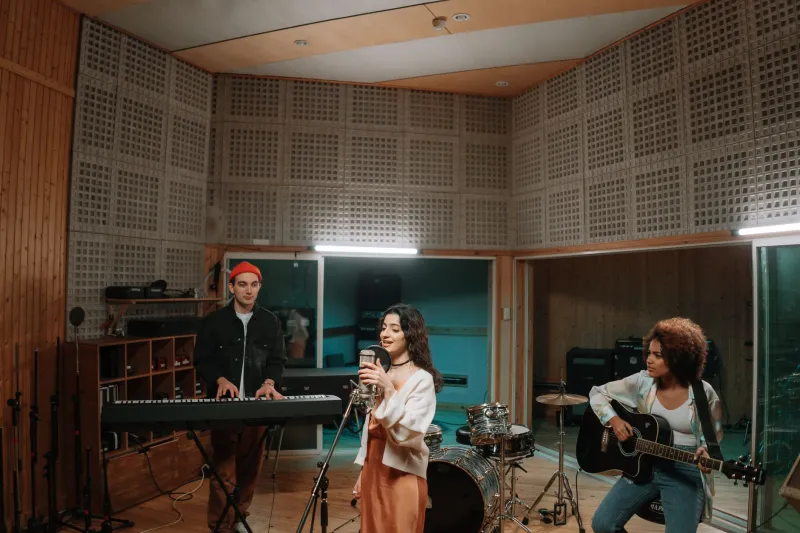
There's a particular kind of identity crisis that hits second-generation immigrant kids right around the time they start making art seriously. You're American enough to get ignored at the Diwali aunty circuit, and you're Indian enough to get the "where are you really from" question at open mics in Brooklyn. For a long time, a lot of Indian-American musicians just picked a lane — lean into the Western sound, tuck the heritage away, and hope nobody notices the tension.
But something has shifted. And if you've been paying attention to what's coming out of Bangalore's studio scene over the last couple of years, you already know what's driving it.
The Pivot Nobody Saw Coming
Call it the Bangalore Diaspora Effect. Across the US — from Atlanta to Los Angeles, from Chicago to Austin — a new generation of Indian-American artists is actively reaching back toward India, not as a sentimental gesture, but as a strategic creative move. And Bangalore, with its collision of classical tradition and cutting-edge production culture, has become the gravitational center of that reconnection.
These aren't artists who grew up listening to their grandparents' cassette tapes and decided to sample a sitar for the aesthetic. These are working musicians with real US careers who have come to understand that the thing that makes them different in a saturated American market is exactly the thing they were trained to downplay.
The city itself plays a massive role in why this is happening here and not, say, Mumbai or Delhi. Bangalore has always had this dual identity — tech-forward but culturally rooted, globally connected but fiercely local. For a diaspora artist trying to bridge two worlds, that energy is genuinely magnetic.
"I Didn't Go There to Find My Roots. I Went There to Find My Sound."
That distinction matters. The artists driving this trend are quick to push back on the idea that what they're doing is some kind of heritage tourism with a microphone. This isn't about recreating something old. It's about building something that has never existed before.
Take the template that keeps repeating itself: an Indian-American artist — raised on a mix of R&B, hip-hop, or indie rock alongside whatever classical music their parents insisted on — eventually hits a ceiling in the US market. Not a failure ceiling, but a creative one. The music is good. It just doesn't feel entirely theirs. So they make the trip. They spend time in Bangalore's studios, connect with producers who are already doing wildly innovative things with Carnatic scales and modern production, and come back with something that sounds like nothing else on the American charts.
That competitive advantage is real and it's measurable. In a streaming landscape where standing out is everything, sonic identity is currency. And artists who can authentically blend South Indian musical DNA with contemporary US genres are sitting on something genuinely rare.
The Collaboration Model That's Actually Working
What's particularly interesting about this movement is how the collaborations are being structured. This isn't the old-school model where a Western artist flies in, extracts a few "exotic" sounds, and disappears. The relationships being built between diaspora artists and Bangalore's creative community are longer, more reciprocal, and frankly more interesting.
Bangalore producers and composers bring deep technical knowledge — modal structures, rhythmic frameworks from classical traditions, and an instinctive understanding of how to create emotional tension through scale choices that most Western-trained musicians have never encountered. The diaspora artists bring market knowledge, genre fluency in hip-hop, pop, and alternative spaces, and an understanding of what US listeners respond to emotionally.
The result is a genuine exchange rather than an extraction. And the music that comes out of it tends to have a layered quality — something that rewards repeated listening, that reveals itself slowly the way good art is supposed to.
Why Nostalgia Is the Wrong Frame
One of the most important things to understand about what's happening is that nostalgia is not the engine here. Nostalgia is static. What these artists are responding to is something dynamic — Bangalore's creative scene as it exists right now, not as a preserved artifact of their parents' generation.
The city's music community has been quietly evolving for years, absorbing global influences while maintaining a genuine connection to South Indian classical traditions. The bedroom producers working out of apartments in Indiranagar aren't making music that sounds like 1985. They're making music that sounds like 2027. And when a diaspora artist walks into that environment, they're not stepping back in time. They're stepping into a laboratory.
That reframing — from Bangalore as a nostalgic relic to Bangalore as a living creative ecosystem — is what separates the artists who are genuinely succeeding with this approach from those who are just making aesthetic gestures.
The Identity Question, Answered Differently
For a lot of these artists, the creative journey to Bangalore ends up resolving something personal that years of therapy and journaling couldn't quite touch. Not because India is some magical answer to the immigrant identity question, but because the act of making music that honestly reflects all of who you are — without editing or apologizing — has a way of settling things.
The artists who come back from Bangalore talking about it in these terms aren't being dramatic. There's genuine psychological relief in making something that doesn't require you to split yourself in half. When the music contains both the R&B you grew up loving in suburban New Jersey and the Carnatic scales your mom hummed in the kitchen, you stop feeling like a fraud in both worlds.
And audiences feel that authenticity. American listeners, particularly younger ones, are remarkably good at detecting when something is real versus when it's been assembled to check a diversity box. The artists who are building genuine creative relationships with Bangalore's community are making music that passes that test.
Where This Goes Next
The Bangalore Diaspora Effect is still early. The artists leading it right now are mostly operating in indie and underground spaces, building audiences organically through streaming and social media rather than major label machinery. But the trajectory is clear, and the major label A&R world is starting to pay attention — which, if the history of American music tells us anything, means the mainstream version of this sound is probably about two to three years away.
For now, though, the most exciting version of it is happening in the spaces between — in studio sessions that run until 3 AM in Bangalore, in WhatsApp voice notes traded between HSR Layout and Harlem, in songs that are being built by people who understand instinctively that the most interesting music has always come from the collision of worlds.
Bangalore's beats have always had something to say to the world stage. Turns out, some of the people listening most closely grew up halfway around the globe — and they're finally ready to answer back.