Signed Without a Suitcase: How Bangalore Artists Are Locking Down US Label Deals From Their Living Rooms
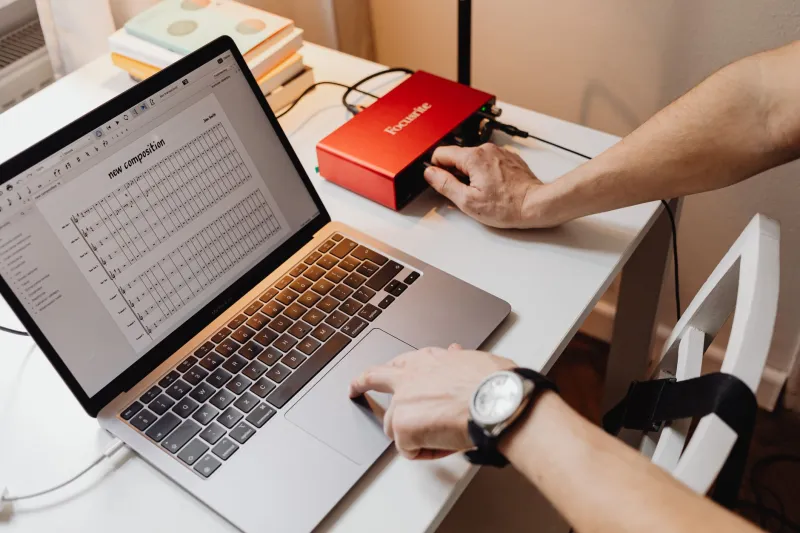
For decades, the music industry ran on a pretty simple rule: if you wanted to get signed to a major US label, you eventually had to show up. You moved to LA, you networked at the right parties, you got in front of the right A&R rep at the right showcase on the right Tuesday night. Geography was basically a prerequisite.
That rule? It's quietly getting shredded.
Right now, a growing number of Bangalore-based musicians, producers, and vocalists are securing deals with major US labels and publishing houses — and doing it entirely from home. No relocation. No showcase circuit. No red-eye flights to Burbank. Just a laptop, a solid internet connection, and a very deliberate approach to getting noticed from 8,000 miles away.
We spent the last few weeks talking to artists, managers, and industry insiders to figure out how this is actually working. What we found is less about luck and more about a fundamental shift in how the music business operates — and how a handful of sharp Bangalore artists figured that out before most people even noticed.
The Pandemic Cracked the Door Open
Let's be honest: COVID did a lot of damage to the music world. But it also forced US labels to figure out how to sign, develop, and work with artists they couldn't physically meet. Zoom calls replaced studio sessions. Dropbox folders replaced hand-delivered demo tapes. And A&R reps who used to spend their weeks at venues suddenly had nothing to do but sit at home and scroll through SoundCloud, YouTube, and SubmitHub submissions.
"The gatekeeping infrastructure kind of collapsed for a minute," says one LA-based A&R consultant who works with two major labels and asked to stay anonymous. "And in that gap, a lot of international artists got through who wouldn't have had a shot before. Some of them were genuinely incredible. Labels noticed."
Bangalore artists were among those who slipped through that gap — and then held the door open.
The Tools That Are Actually Moving the Needle
If you ask Bangalore-based producer Kiran S. how he got his publishing deal with a mid-size US company last year, he doesn't lead with talent. He leads with infrastructure.
"I had my music on every platform, obviously. But more importantly, I had a press kit that looked like it came from a US-based artist. Professional bio, streaming stats formatted the way American labels expect to see them, a one-sheet that didn't look like an afterthought."
That attention to presentation is something multiple artists brought up. The US music industry has its own visual and professional language, and Bangalore artists who've broken through tend to be fluent in it — even if they've never set foot in a label office on Sunset Boulevard.
Beyond presentation, the tools doing the heavy lifting include:
- SubmitHub and similar platforms for direct A&R submissions with actual feedback loops
- LinkedIn, surprisingly — several artists mentioned cold-connecting with A&R reps and music supervisors directly, with personalized messages that didn't feel like spam
- Sync licensing platforms like Musicbed and Artlist, which have become backdoor entry points into the US industry for producers whose beats land in ads, TV shows, or YouTube content that catches a label's attention
- Discord communities built around specific US producers and label ecosystems, where Bangalore artists are showing up, contributing, and building relationships organically
Singer-songwriter Priya M., who signed a development deal with a boutique US label earlier this year, credits a lot of her breakthrough to sync placements. "I had a track placed in an indie short film that got some festival attention. The music supervisor shared it. An A&R person heard it. We started talking on Instagram DMs. Six months later I had a deal. I still haven't been to the US."
What A&R Reps Are Actually Looking For
Here's the thing about the current US label landscape: everyone is hunting for the next sound that feels fresh but familiar enough to market. And right now, the Bangalore scene is producing exactly that.
The blend of classical Indian musical theory with contemporary production — trap hi-hats over raga-influenced melodies, Carnatic scales showing up in pop hooks — is genuinely interesting to US ears in a way it hasn't been before. Labels aren't looking at it as "world music" anymore. They're looking at it as a competitive edge.
"There's a hunger for something that doesn't sound like it came out of Atlanta or North London," says music journalist and industry observer Dana Reeves, based in New York. "Bangalore artists are offering that. And the streaming data is backing it up. You can't argue with numbers."
Streaming data is, in fact, one of the biggest equalizers in this whole equation. A Bangalore artist with 200,000 monthly Spotify listeners and strong engagement numbers in US cities like Fremont, Sunnyvale, or Jersey City — places with large South Asian diaspora communities — is showing US labels a ready-made audience. That's not a pitch, that's a business case.
The Networking Game, Played Differently
What's interesting is that the most successful Bangalore artists breaking into the US market aren't just passively posting music and hoping someone notices. They're actively building relationships — just doing it through channels that didn't exist ten years ago.
Twitter (or X, whatever we're calling it this week) music communities. Reddit threads in r/WeAreTheMusicMakers. Clubhouse rooms during its brief moment of relevance. Now, more than anything, TikTok — where a 30-second clip of a track can land in front of a label's content team faster than any formal submission process.
Kiran puts it plainly: "You have to be where the US music conversation is happening online. Not just posting your music. Actually participating. Commenting on other people's work. Being a person, not just a brand."
Several artists also mentioned the value of connecting with the Indian-American music community in the US as a bridge. Producers and artists with one foot in each world have become informal ambassadors, making introductions and vouching for Bangalore talent in rooms that are otherwise hard to access.
The Deals Look Different Too
It's worth noting that the deals Bangalore artists are landing aren't always the traditional major label contracts of the old industry. Distribution deals, publishing agreements, sync licensing contracts, and development arrangements are more common entry points — and honestly, for many artists, they're the smarter play anyway.
The leverage stays closer to home. The creative control stays intact. And the relationship with a US label or publisher becomes a launching pad rather than a cage.
"I didn't want someone in LA deciding what my music should sound like," Priya says. "The deal I have lets me stay in Bangalore, keep making music my way, and get US distribution and sync support. That's what I needed."
What This Means Going Forward
The Bangalore-to-US pipeline isn't a fluke. It's a structural shift driven by streaming economics, remote work culture that normalized digital-first relationships, and a genuine appetite in the US market for sounds that feel new.
For artists still navigating this from Bangalore — or anywhere outside the traditional music industry capitals — the message from everyone we spoke to is pretty consistent: the geography gap is closeable. But it takes intentionality. It takes understanding how the US industry thinks and speaks. And it takes showing up consistently in the digital spaces where those conversations are actually happening.
The suitcase is optional. The hustle is not.