Why Making Music in Bangalore Costs More Than You Think — And What That Means for the Artists Who Stay
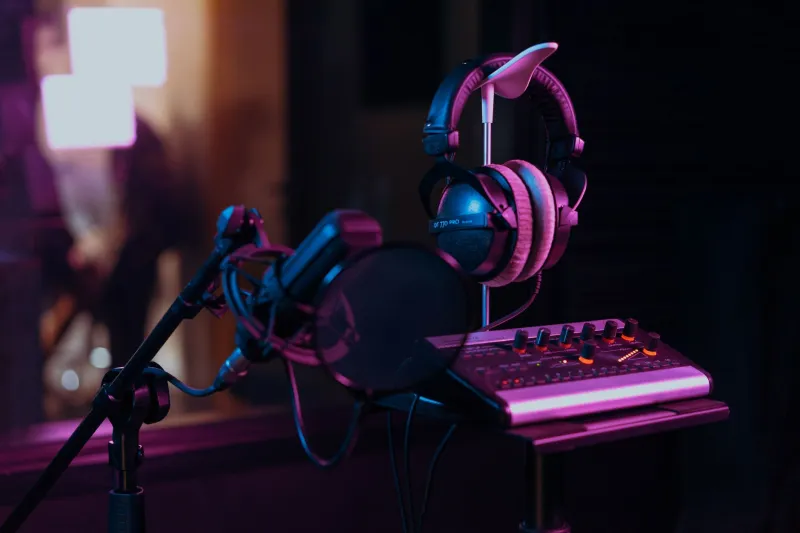
Everybody loves talking about Bangalore's music scene like it's this unstoppable creative force ready to take on the world. And honestly? The talent part of that story is real. But there's another conversation happening — quieter, less glamorous, and way more stressful — that's going on in DMs, WhatsApp groups, and late-night studio sessions across the city. It's about money. Not the currency exchange stuff people already know about, but the actual, granular cost of trying to build a professional music career in Bangalore when the global industry increasingly expects LA-level output.
This is what some people are starting to call the Bangalore Sound Tax — the invisible premium artists pay just to exist in a market that wasn't fully built for what they're trying to do.
The Studio Math Nobody Wants to Do Out Loud
Let's start with the basics. A decent mid-tier recording studio in Bangalore — the kind with a proper isolation booth, a calibrated monitoring setup, and an engineer who actually knows what they're doing — runs somewhere between ₹2,000 and ₹5,000 per hour depending on the facility and the time slot. That sounds reasonable until you do the conversion and realize you're talking about $24 to $60 USD per hour.
For comparison, a solid home studio session in Los Angeles with a freelance engineer can run $50 to $75 an hour — but that engineer is often working in a space with acoustics that took years and serious money to dial in. The Bangalore studio at ₹5,000? It might have a treated room, or it might have a room that looks treated but sounds like a bathroom tile experiment. Quality control is wildly inconsistent, and artists often end up paying for multiple sessions just to get the sound they could have captured in one go somewhere better equipped.
The real killer, though, is equipment. A professional-grade condenser microphone, an audio interface that doesn't introduce noise, studio monitors that translate well — this gear costs roughly the same in rupees as it does in dollars. Import duties on electronics in India can push the price of a $400 interface to the equivalent of $600 or more by the time it clears customs. Artists building home studios in Bangalore are often spending proportionally more of their income on gear than their US counterparts, for equipment that may have taken months to arrive and came with no local warranty support worth trusting.
Internet: The Hidden Studio Fee
Here's one that doesn't show up on any invoice but absolutely shows up in the final product. Reliable, high-speed internet in Bangalore is... a complicated relationship. Fiber is available in many parts of the city, but power outages, infrastructure inconsistencies, and building-level connection issues mean that artists trying to collaborate in real time with producers or labels in the US are constantly fighting latency, dropped calls, and sessions that fall apart mid-take.
This matters more than people realize. Remote collaboration has become the standard working method for the global music industry. Platforms like Splice, Sessionwire, and even basic Zoom sessions require stable, low-latency connections. When a Bangalore producer is trying to co-write with someone in Atlanta at 10 PM IST — which is already a scheduling compromise — and the connection keeps cutting out, that's not just annoying. It's a professional liability. It makes them look unreliable to collaborators who don't understand the infrastructure context, and it slows down the creative process in ways that compound over time.
Some artists have started paying for redundant connections — two separate ISPs running simultaneously as a failover system — just to ensure they can maintain professional-grade calls. That's an extra monthly cost that their US counterparts simply don't have to think about.
Licensing Fees and the Global Platform Gap
Distributing music globally from India has gotten easier, but it hasn't gotten cheap or simple. Licensing clearances for samples — especially if an artist is working with Western music references or interpolating anything with US copyright holders — can become an expensive, slow-moving nightmare. Legal support for music rights in India that intersects with US copyright law is a niche specialty, and those lawyers charge accordingly.
Beyond samples, there's the broader issue of sync licensing. Getting a song placed in a US TV show, ad campaign, or streaming playlist often requires a US-based publishing entity or at minimum a US-registered PRO affiliation. Artists navigating this from Bangalore are either paying for representation they can barely afford or missing opportunities entirely because the paperwork trail gets too complicated for a busy music supervisor to untangle.
The Remote US Setup: A Workaround That's Becoming a Trend
So what are the artists who are serious about cracking the US market actually doing? A growing number of Bangalore producers are investing in remote US-based infrastructure — essentially paying for a slice of the American music economy while staying physically in India.
This looks different for different people. Some are co-owning studio time in LA or New York through partnerships with diaspora contacts, maintaining a presence on paper and in the credits even when they're not in the room. Others are registering LLCs in the US, opening American bank accounts, and funneling their streaming and sync revenue through domestic US structures to simplify licensing and payment. A few have gone further, investing in rack-mounted studio equipment that lives in a US facility they remote into via software — essentially renting access to American acoustics from a Bangalore bedroom.
It's a hustle that works, but it's also expensive, logistically complex, and emotionally exhausting. You're essentially paying to maintain two professional identities in two different economies.
What This Means for the Artists Who Choose to Stay
Not everyone leaves, and not everyone wants to. There's a real and growing contingent of Bangalore artists who are committed to building something at home — not as a consolation prize, but as a deliberate creative and cultural statement. These artists are finding ways to stretch budgets, share resources, and build collective studio spaces that distribute the infrastructure costs across multiple artists.
But they're doing it with a weight their US counterparts don't carry. Every professional decision — every session booking, every software subscription, every collaboration attempt — comes with an extra layer of friction and cost that simply doesn't exist at the same scale for an artist operating out of Nashville or Chicago.
The Bangalore Sound Tax is real. It doesn't show up on a receipt, but it shows up in the decisions artists make about where to build their lives and careers. And until the infrastructure catches up to the talent — which is absolutely there — the city will keep losing some of its best to cities that make the math easier.
That's the part of the global music conversation we don't talk about enough.