Rupees, Rates, and Riffs: How the Currency Gap Is Reshaping What Bangalore Artists Can Actually Make
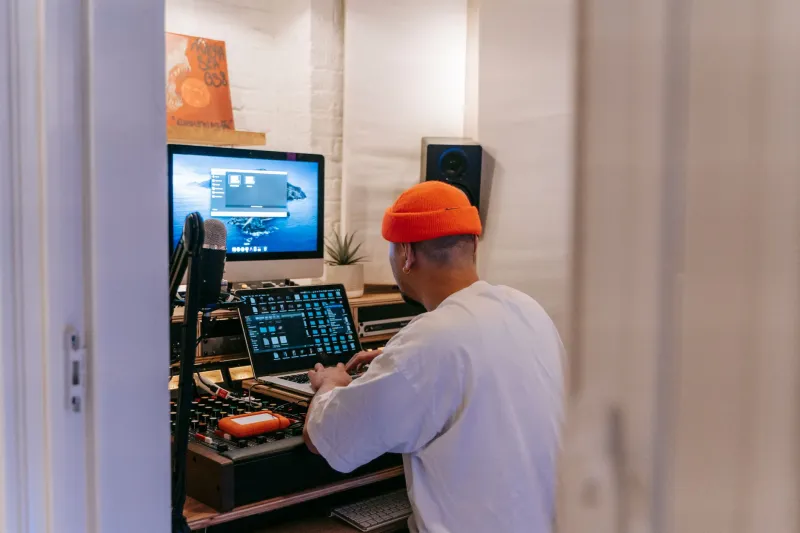
There's a moment every Bangalore producer knows well. You're deep in a YouTube rabbit hole, watching some Brooklyn beatmaker casually drop $3,000 on a vintage synthesizer like it's a grocery run. You do the mental math — that's roughly 250,000 rupees — and you close the tab. The dream doesn't disappear, but it definitely gets a little harder to hold onto.
This isn't a sob story. It's actually way more complicated and, honestly, more interesting than that. The currency gap between the US dollar and the Indian rupee has been quietly reshaping what Bangalore's emerging artists can afford to create, how they price their work internationally, and — here's the twist — it might actually be accelerating some of the most exciting cross-border collaborations happening in music right now.
The Real Cost of Making Music When the Rupee Is Sliding
Let's talk numbers for a second. Over the past few years, the rupee has softened considerably against the dollar, sitting in that 82–84 range that makes imported gear feel almost cartoonishly expensive. A mid-range audio interface that costs $200 in the US translates to a significant chunk of a month's rent in Bangalore. A quality condenser mic, a decent MIDI controller, a software bundle — stack those purchases together and you're looking at an investment that takes most independent artists months to save up for.
Rohit S., a producer working out of Indiranagar who asked us to use only his first name, put it plainly: "Every time I want to upgrade something in my setup, I'm not just thinking about the rupee price. I'm thinking about what that piece of gear is worth in dollars, because that's what it's actually pegged to. The market here doesn't care about our currency situation."
Software subscriptions compound the problem. Most of the industry-standard DAWs, plugin bundles, and cloud tools are priced in USD, which means Indian artists are essentially paying a premium that fluctuates with the exchange rate every single month. It's a subscription tax that US-based artists don't even have to think about.
So Why Are Some Artists Actually Thriving?
Here's where it gets interesting. The same currency gap that makes gear expensive also makes Bangalore talent incredibly attractive to US clients. If a producer in Atlanta is paying $500 for a beat, and a Bangalore producer delivers the same quality for $150, everyone wins — except the Atlanta producer, maybe.
This dynamic has quietly turned currency asymmetry into a competitive advantage. Bangalore artists who've figured out how to market themselves internationally are essentially offering a premium product at a discount price, not because they're undercutting their own value, but because the math just works out that way across borders.
Priya M., who produces ambient and neo-soul tracks and licenses them to US sync libraries, told us that about 70% of her income now comes from international clients. "I don't think of myself as cheap," she said. "I think of myself as strategic. My costs are in rupees. My income is increasingly in dollars. That spread is actually my business model right now."
Crypto Is Entering the Chat
If currency exchange is the problem, some artists think crypto might be part of the solution — or at least a workaround worth paying attention to.
A growing number of Bangalore producers are now accepting payment in USDC (a dollar-pegged stablecoin) and even Bitcoin for beat sales, licensing deals, and collaboration fees. The appeal is obvious: no conversion fees, no bank delays, no questions about international wire transfers. The money lands, it's stable, and it bypasses the friction that comes with traditional cross-border payments.
"I did a collab with a producer in Houston last year and he paid me in USDC," said Arjun D., who makes electronic music influenced by Carnatic structures. "It was honestly the smoothest transaction I've ever had for international work. No middleman taking a cut, no waiting three to five business days. It just happened."
Not everyone is convinced, though. Crypto's volatility — even for stablecoins, which carry their own risks — makes some artists nervous about building their income around it. And the regulatory environment in India around crypto remains murky enough that plenty of people are taking a wait-and-see approach before going all in.
The Collaboration Pipeline Is Real
One of the more unexpected outcomes of all this financial pressure is that it's pushing Bangalore artists toward international collaboration faster than almost any other factor. When your domestic market is constrained and your skills are globally competitive, the logical move is to go global.
US producers are increasingly open to remote collaboration — COVID normalized it, and the quality of work coming out of cities like Bangalore has made the timezone difference feel like a minor inconvenience rather than a dealbreaker. Some Bangalore artists are even using the currency gap as a direct pitch: "You get a world-class sound at a price that makes sense for your budget."
It's working. Multiple producers we spoke to mentioned that their international inquiry volume has gone up significantly over the past two years, with US clients making up the largest share of new outreach.
Adapting the Workflow
Beyond the financial strategy, artists are also adapting how they actually work. Cloud-based tools are replacing expensive hardware where possible. Collaborative platforms like Splice and BandLab have become more central to workflows because they reduce the need for costly local storage and software. Some producers are pooling resources — sharing studio time, splitting plugin subscriptions, co-investing in gear — in ways that feel less like compromise and more like community.
There's also a growing awareness around pricing transparency. Artists who work internationally are getting smarter about quoting in USD upfront, building exchange rate buffers into their rates, and having frank conversations with clients about what fair compensation actually looks like across different economic contexts.
The Bottom Line
The currency gap is real, it's inconvenient, and it creates genuine barriers for artists trying to build professional setups in Bangalore. But it's also, weirdly, one of the forces pushing the city's creative scene onto the global stage faster than it might have gotten there otherwise.
The artists who are navigating this well aren't just surviving the economic math — they're using it. They're building international client bases, experimenting with new payment infrastructure, and positioning themselves in a global market where their talent is the constant and the currency is just a variable.
And honestly? That kind of resourcefulness tends to make for better music anyway.