Thirty Seconds to Viral: How TikTok Is Making Bangalore's Underground Artists Impossible to Ignore
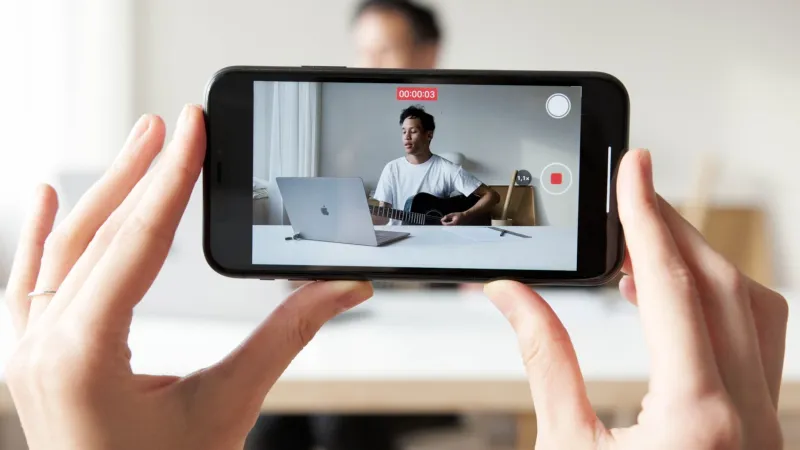
Gen Z doesn't wait for a label to tell them what's good — they find it themselves, usually at 2am while doom-scrolling. And right now, a whole lot of them are stumbling onto something coming out of Bangalore that they genuinely can't explain but absolutely cannot stop listening to.
Short-form video has completely rewritten the rules of music discovery. What used to take years of touring, radio play, and label machinery now takes about thirty seconds and the right hook at the right moment. For Bangalore's underground scene, that's not a threat — it's a cheat code.
The Algorithm Doesn't Care Where You're From
Here's the thing about TikTok's For You Page: it has zero interest in geography. It doesn't care that an artist is recording in a flat in Indiranagar instead of a studio in Nashville. It cares about one thing — whether you stop scrolling. And Bangalore's emerging artists have figured out something that a lot of Western producers are still catching up to: layered, textured sound design stops thumbs cold.
The sonic palette coming out of Bangalore's underground right now is genuinely unlike anything the algorithm has mass-served before. You've got producers blending carnatic melodic lines with hyperpop production, artists weaving Kannada and English lyrics in ways that feel completely natural rather than gimmicky, and a rhythmic sensibility that's rooted in classical Indian percussion but hits with the same chest-thumping weight as anything on a US club playlist. That combination is new. And new, on TikTok, is everything.
Artists like Priya Raga — a 22-year-old producer and vocalist who records entirely out of her HSR Layout apartment — started posting fifteen-second clips of her work-in-progress tracks in late 2023 with basically zero expectation. "I thought maybe my friends would share it," she told us. "I didn't think someone in Ohio was going to use it for their morning routine video." That Ohio video got 400,000 views. Priya's follower count tripled in a week.
What Makes Bangalore's Sound So Algorithm-Friendly
It's worth actually breaking down why this is happening, because it's not random.
First, there's the melodic density. Carnatic-influenced music tends to pack a lot of emotional information into a short melodic phrase. A raga-based hook can communicate something complex and deeply felt in just a few notes. On a platform where you have maybe three seconds to create a feeling before someone swipes away, that efficiency is genuinely powerful.
Second, there's the rhythmic unpredictability. Tala structures — the rhythmic cycles in classical Indian music — operate on patterns that Western ears aren't used to anticipating. That slight unfamiliarity creates what music psychologists sometimes call "the chills" response. You can't predict exactly where the beat is going, so you stay engaged. You lean in. You listen again.
Third — and this one might be the most underrated factor — there's the production aesthetic. Bangalore's bedroom producers are largely self-taught, and a lot of them developed their ear outside of Western pop orthodoxy. The result is a mixing style that sounds slightly different from what dominates US streaming charts. Not worse. Just different enough to register as fresh.
Building a Fanbase Before a Label Even Calls
What's fascinating about the current wave of Bangalore artists going viral is how the sequence has flipped. In the old model, a label signed you, a PR team built your story, and fans eventually showed up. Now, the fans show up first — sometimes by the hundreds of thousands — and the label calls you.
Karthik Nair, a 25-year-old multi-instrumentalist and producer who goes by the name KXRN online, had over 80,000 TikTok followers before he'd played a single paid gig. His content strategy was almost embarrassingly simple: he posted short clips of himself layering live veena samples over electronic beats, with no face cam, no commentary, just the process. "I honestly didn't even think of it as content," he said. "I was just showing what I was working on."
The comments on his videos tell their own story. Americans, Brazilians, Nigerians, Koreans — all asking the same thing: where can I hear the full version? That demand created its own kind of leverage. When he eventually uploaded finished tracks to Spotify and Apple Music, he already had an audience primed and waiting. His first proper release hit 50,000 streams in its opening weekend without a single playlist placement.
That's not luck. That's a new kind of infrastructure — one built entirely on short-form video and the community it generates.
The Trend That Crossed Over Without Permission
Earlier this year, a snippet of a track by Bangalore-based artist Meera Srinath — a breezy, sun-drenched piece that blended a traditional folk melody from Karnataka with dreamy lo-fi production — started appearing in videos across TikTok. Nobody coordinated it. Nobody pitched it. American lifestyle creators started using it for their "soft morning" content. Travel vloggers dropped it under footage of coastal drives. A prominent yoga influencer with 2 million followers used it for a meditation reel.
Meera had no idea any of this was happening until her Spotify monthly listeners jumped from around 800 to over 40,000 in the span of ten days. "I kept refreshing the page thinking something was broken," she laughed. It wasn't broken. Her music had simply found its people — and those people happened to be scattered across every US time zone.
She's since been approached by two independent labels and a sync licensing company interested in placing her music in streaming shows and advertisements. None of that would have happened through traditional channels at her career stage. TikTok compressed a five-year timeline into about two weeks.
What This Means for the Scene Back Home
Back in Bangalore, the ripple effects of these viral moments are very real. Artists who used to feel like they were making music in a vacuum — creating for a local scene that was vibrant but limited in its reach — now have evidence that their sound travels. That changes how they think about what they're making.
There's also a community aspect that's easy to underestimate. Bangalore's underground producers and artists are watching each other's viral moments closely, sharing strategies, experimenting with content formats, and building a kind of informal knowledge base around what actually works. It's collaborative in a way that feels genuinely different from the competitive instincts that can sometimes dominate Western music industry culture.
For US listeners who are only just discovering this scene through a thirty-second clip, the rabbit hole is deep and very much worth going down. The artists making it are young, prolific, and operating with a creative freedom that comes from not yet being boxed in by commercial expectations.
That window doesn't stay open forever. Enjoy it while it's still underground.