Tabla Breaks and Tanpura Drones: How Bangalore's Sample Packs Are Eating Hollywood's Lunch
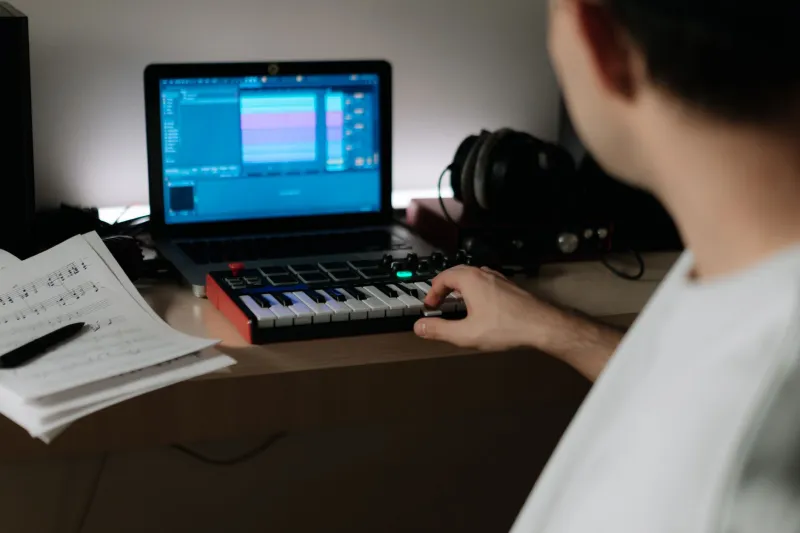
Something shifted in the sample pack market, and most people in the US music industry haven't fully caught up to it yet. While major Hollywood sound design firms were busy charging $300 for the same recycled orchestral hits and trap hi-hat packs they've been selling since 2016, a quieter revolution was building in Bangalore's home studios — and now it's showing up in Billboard-charting records.
Bangalore's producers figured out something that the big libraries missed entirely: culturally specific sounds don't just add flavor, they solve a real creative problem. When every producer on SoundCloud has access to the same Splice mega-pack, differentiation becomes survival. And right now, nothing differentiates faster than a properly recorded tabla break, a processed bansuri line, or a tanpura drone that's been chopped and resampled into something completely unrecognizable but undeniably different.
The Problem With Sounding Like Everyone Else
Talk to any working producer in New York or Los Angeles and they'll tell you the same thing — the generic library problem is real. When mainstream sound packs dominate every platform, records start bleeding into each other. The snare sounds the same. The synth pads feel identical. A&R reps joke that they can identify which Splice pack a demo came from before the first verse ends.
That creative fatigue opened a door, and Bangalore walked straight through it.
Producers here have been sitting on centuries of musical infrastructure — raga frameworks, rhythmic cycles called talas, drone-based harmonic traditions, and a staggering variety of acoustic instruments that Western pop has barely touched. Translating that into sample-ready audio wasn't a massive leap. It was just a matter of someone deciding to package it properly and put it where American producers would actually find it.
What's Actually Selling and Why
The categories moving fastest aren't always what you'd expect. Sure, tabla loops and dhol hits get attention — percussion translates immediately across genres. But some of the strongest-performing packs coming out of Bangalore right now feature processed textures: tanpura drones run through saturation and reverb chains, harmonium chords pitched into ambient pads, veena slides that barely sound like a veena anymore but carry this haunting resonance that synthetic strings just can't replicate.
Then there's the pricing angle, which honestly can't be overstated. A boutique Hollywood sound library with comparable production quality might run $150 to $400 for a single pack. Bangalore creators — working with significantly lower operating costs and a genuine desire to build international audience share — are consistently pricing competitive packs between $15 and $60. For independent producers working on tight margins, that math is obvious.
And quality isn't the compromise you might assume. Bangalore has no shortage of classically trained musicians who can perform these instruments at a level that most Western session players simply cannot approximate. When a producer in Atlanta is building a track and needs authentic mridangam patterns — not a VST approximation, but something recorded by someone who actually studied the instrument — Bangalore is increasingly where that comes from.
The DAW Company Angle Nobody's Talking About
Here's where things get really interesting from an industry standpoint. The major digital audio workstation companies — the platforms that millions of producers build their entire workflow around — have been quietly expanding their content partnerships beyond the traditional LA and New York developer network. The reason isn't altruistic. It's market-driven.
When user data shows that Indian-made sample content is being downloaded and favorited at rates that outpace legacy Western libraries, that's information a platform can't ignore. Several Bangalore-based creators have landed partnership deals that give their packs featured placement within DAW ecosystems — the kind of visibility that used to require either a Los Angeles address or a very expensive licensing arrangement.
These partnerships matter beyond the individual creator's revenue. They signal a structural shift in who gets to define what sounds are considered "professional" or "industry-standard." For a long time, that definition was written almost entirely in California. It's being rewritten right now, partly in Bangalore.
The Revenue Reality for Bangalore's Creative Economy
Let's talk numbers in real terms. A mid-tier sample pack that performs consistently on a platform like Splice or Gumroad can generate anywhere from a few hundred to several thousand dollars monthly in passive income. For a producer in Bangalore, where the cost of living and studio overhead run considerably lower than in American music hubs, that revenue has proportionally more impact.
This is creating something genuinely new in Bangalore's music ecosystem — a class of producers who aren't dependent on the traditional revenue streams of live performance fees, sync licensing, or label advances. They're building income through intellectual property, through owning the sounds themselves. That's a fundamentally different relationship with the music business, and it's one that travels well across borders.
Multiple creators here have described sample pack income as the financial foundation that lets them take creative risks elsewhere — funding album projects, turning down commercial work that doesn't excite them, investing in better recording equipment. The sample market is quietly subsidizing Bangalore's broader artistic ambition.
What American Producers Are Actually Using This For
Scroll through production forums and Discord servers where US beatmakers congregate and you'll find something telling: Bangalore sample packs are showing up in conversations about hip-hop, lo-fi, ambient electronic, pop production, and film scoring. The use cases are remarkably diverse.
For hip-hop producers, the rhythmic complexity of Indian percussion offers something genuinely fresh — polyrhythmic patterns that don't sit where a Western listener expects them to, creating tension that makes a track feel alive. For ambient and electronic producers, drone-based textures provide harmonic depth that synthetic pads struggle to match. Film composers are using Indian instrument samples to add geographic and emotional specificity to underscore.
None of this is replacing Indian music with a Western filter. The best applications are collaborative in spirit — producers engaging with these sounds thoughtfully, letting the cultural DNA of the sample inform where the track goes rather than just slapping an exotic flavor on something generic.
Where This Goes Next
The trajectory feels pretty clear from where I'm sitting. As global streaming continues to flatten the playing field and American producers become increasingly hungry for sonic differentiation, the market for culturally specific, high-quality, affordably priced sample content isn't going anywhere but up.
Bangalore's producers are positioned well — not just because of the sounds they have access to, but because many of them understand both the traditional musical frameworks and the contemporary production contexts those sounds are landing in. That dual literacy is genuinely rare and genuinely valuable.
The Hollywood sound libraries aren't going away. But they're going to have to share the shelf, and increasingly, they're going to have to compete on something other than brand recognition alone. That's a competition Bangalore seems pretty comfortable with right now.
For American producers still defaulting to the same overpriced packs out of habit — it might be worth taking a look at what's coming out of Karnataka. Your tracks might thank you for it.