Why Your Bangalore Collab Fell Apart Before It Started (And What You Should Have Done Instead)
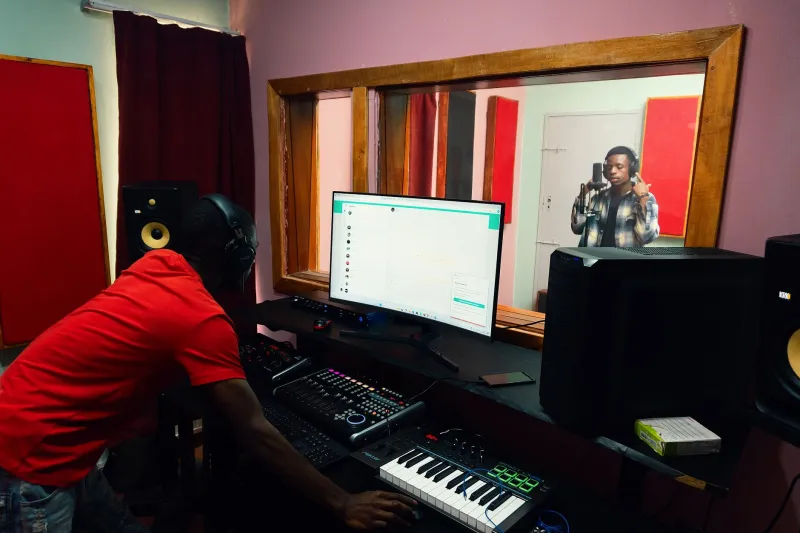
Let's be real for a second. If you're a US-based artist who's been paying attention to what's coming out of Bangalore's music scene — and a lot of you have been — there's a decent chance you've already slid into a DM, sent a cold email, or maybe even hopped on a call with a Bangalore creator about a potential project. And there's also a decent chance that project went nowhere.
You're not alone. This is actually one of the more consistent patterns in the current wave of US-India music collaboration: genuine enthusiasm on both sides, followed by a slow fade that leaves everyone vaguely frustrated and nobody quite sure what happened.
The good news is that these failures are almost always preventable. The bad news is that preventing them requires American artists to do some homework they're often not used to doing.
The First Mistake: Treating It Like a Typical Collab Request
When US artists reach out to other US artists about a potential collaboration, there's a shared cultural shorthand that makes the conversation move fast. You both know what the ask looks like, what the timeline usually is, what the credit split conversation sounds like, what "let's vibe and see" actually means in practice.
None of that shorthand transfers automatically to a Bangalore context, and assuming it does is where a lot of these conversations die.
Bangalore creators — particularly those who've built audiences and developed distinct creative identities — are often fielding multiple inbound requests from US artists simultaneously. They've seen the pattern: enthusiastic opening message, vague creative brief, a request to "send something over" to see if there's chemistry, followed by silence or a pivot that treats their contribution as a starting point rather than a collaboration.
That's not a collaboration. That's unpaid spec work with extra steps. And Bangalore's creator community has gotten pretty good at recognizing it.
The Timezone Problem Nobody Plans For
This one sounds logistical and boring. It's actually one of the most common project killers.
Bangalore Standard Time runs about 10.5 hours ahead of Eastern, and 13.5 hours ahead of Pacific. That gap is manageable, but it requires actual planning — not just a vague intention to "figure it out as we go." What happens in practice is that the US artist sends notes during their afternoon, the Bangalore creator receives them late at night or early the next morning, responds during their working hours, and the US artist has gone to sleep by the time that response lands.
Over a short project, this is fine. Over a longer creative process that requires real-time decision-making, it creates a communication lag that slowly erodes momentum. Deadlines slip. Enthusiasm cools. Someone stops responding as quickly. The project quietly dies.
The fix is embarrassingly simple: establish a communication rhythm upfront. Agree on which platform you're using, what a reasonable response window looks like on both sides, and schedule at least one real-time touchpoint per week if the project warrants it. Bangalore creators who've done this work before will appreciate that you've thought about it. Those who haven't will be relieved you brought it up.
Compensation Conversations Nobody Wants to Have
Here's the uncomfortable one.
There's a version of the currency gap argument — the fact that USD goes significantly further in Bangalore than in the US — that gets used to justify offering Bangalore creators rates that wouldn't be acceptable to a US artist doing equivalent work. This is a problem, and it's one that's becoming more visible as Bangalore's creative community develops a stronger sense of its own market value.
The flip side is that some US artists, particularly independent ones working with limited budgets, genuinely don't know what a fair offer looks like in this context. They're not trying to lowball anyone — they just don't have a reference point.
So establish one early. Ask directly what the creator's rate is for the type of work you're discussing. Don't assume that because you're offering "exposure" to a US audience, that exposure is worth more than actual payment. Bangalore artists with real creative credibility often have audiences that are already international — your platform might be less of a draw than you think, and leading with it as a value proposition can come across as condescending.
If your budget is genuinely limited, say that upfront and ask what's possible within those constraints. That conversation goes better than the one where rate expectations collide after three weeks of creative work.
The Creative Brief Problem
US artists often approach collaboration with a very outcome-focused mindset: here's the track, here's what I need, here's when I need it. That's efficient, but it leaves almost no room for the Bangalore creator to actually contribute their creative perspective — which is, presumably, why you wanted to work with them in the first place.
Bangalore's most interesting creators aren't looking for projects where their role is to add an "Indian sound" to something that's already essentially finished. That's not collaboration — that's sonic decoration. And it produces work that feels exactly as hollow as it sounds.
The collabs that actually work — and there are genuinely great ones happening right now — tend to start with a looser frame. A mood, a reference point, a question rather than a directive. They make space for the Bangalore creator's instincts to shape the project's direction, not just its texture. That requires US artists to be comfortable with a creative process that's less controlled than they might be used to. For the right project, it's absolutely worth it.
What a Good Collab Actually Looks Like
The pattern in the successful partnerships is pretty consistent. The US artist does their research first — they know the Bangalore creator's actual work, not just their most viral moment. They come in with a genuine creative question rather than a finished concept that needs a signature. They handle the logistics like professionals: clear timeline, clear compensation conversation, clear communication channel.
And crucially — they treat the collaboration as a two-way creative exchange rather than a transaction where one side is acquiring a service from the other.
Bangalore's creative community is genuinely open to working with US artists. The city's musical culture is built on synthesis and exchange — that's part of what makes it so interesting to the rest of the world right now. But openness isn't the same as availability on any terms. Come correct, come prepared, and come with actual creative humility. That's the whole roadmap.