How Bangalore's Acoustic DNA Became the Secret Weapon in Global Production Studios
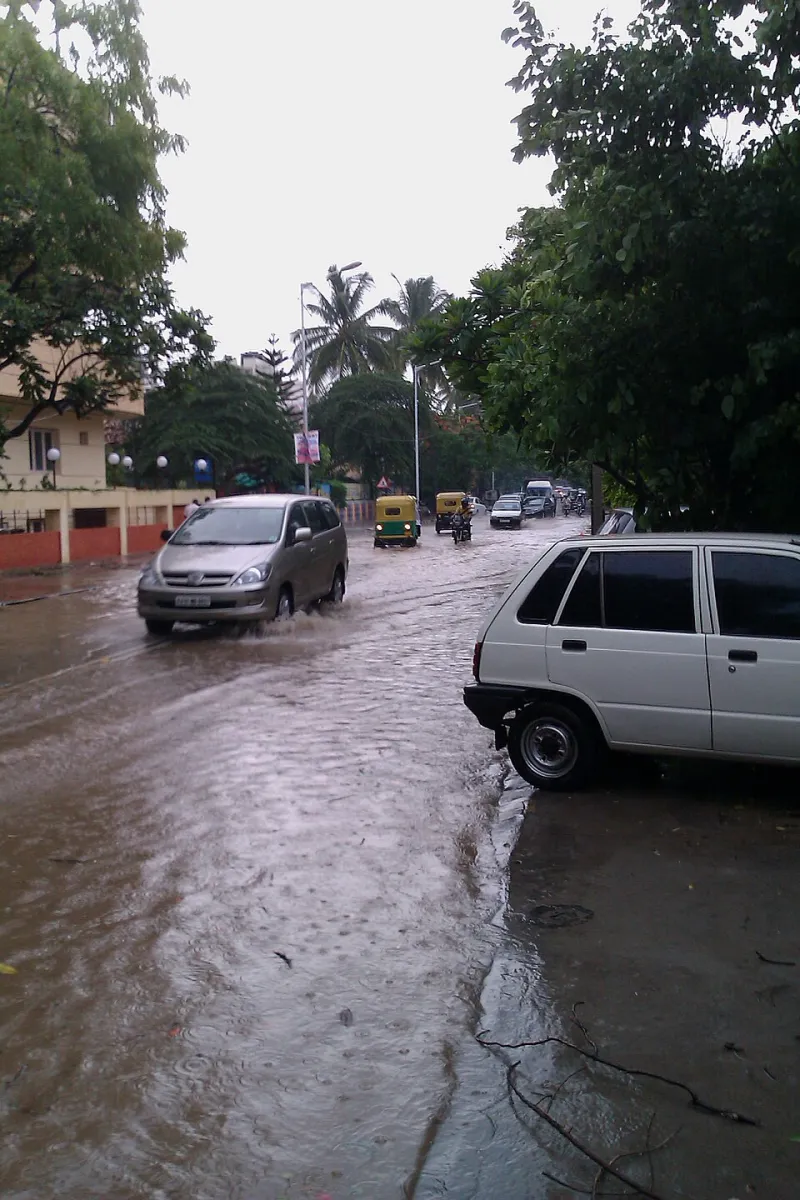
Photo: Ashwin Kumar from Bangalore, India, CC BY-SA 2.0, via Wikimedia Commons
There's a specific kind of reverb that happens when rain hammers the corrugated iron rooftops of Bangalore's older neighborhoods. It's not something you can dial in with a plugin. It's not on any preset menu in Ableton or Logic. But producers from Berlin to Brooklyn have been chasing it for the better part of three years — and a growing number of them will tell you, off the record, that it's the missing ingredient in tracks they've been trying to finish for months.
Welcome to what insiders are quietly calling the Bangalore Sound Effect: the idea that one city's specific, unrepeatable acoustic identity has become a kind of global production shortcut — a cheat code for atmosphere that no amount of studio engineering can fully replicate.
The City as an Instrument
Every city has a sonic character. New York has its subway rumble and taxi horns. Tokyo has its precise, almost musical pedestrian crossing signals. But Bangalore's soundscape is something genuinely unusual — a collision of ancient and hypermodern that produces audio textures you simply don't encounter anywhere else.
Think about it: a city where a Carnatic music practice session bleeds through the walls of an apartment above a startup accelerator. Where autorickshaws rev against the backdrop of temple bells marking the hour. Where the monsoon doesn't just bring rain — it brings a full acoustic transformation of the urban environment, turning every surface into a percussion instrument and every alleyway into a natural reverb chamber.
Sound designer Priya Nair, who splits her time between Bangalore and Los Angeles, puts it bluntly. "When I first moved to LA, I kept trying to recreate textures I'd absorbed just by living in Bangalore. The way sound bounces off old stone walls during a rain shower. The specific frequency of a temple bell that's been rung ten thousand times. You can approximate it, but you can't fake it."
Temple Bells and Traffic Rhythms
The two sonic signatures that come up most often in conversations with producers are the temple bell and what some are calling Bangalore's traffic rhythm — the irregular, almost polyrhythmic honking patterns that emerge during peak commute hours on roads like Hosur Road or the Outer Ring Road.
These aren't cute novelties. Producers are using them structurally.
A beatmaker based in Atlanta — who asked not to be named because he hasn't publicly credited his sources — described chopping up a five-minute field recording of Bangalore traffic into a rhythmic grid. "The honking isn't random," he said. "When you slow it down and look at the waveform, there's this natural syncopation happening. Drivers are responding to each other. It's basically a conversation in rhythm."
Temple bells, meanwhile, have a harmonic richness that synthesizers struggle to match. The metal alloys used in South Indian temple bells produce overtone series that sit in unusual frequency relationships — not quite in tune with Western equal temperament, which is precisely what makes them interesting to producers working in genres where harmonic surprise is a selling point.
Why Bangalore Specifically?
India has hundreds of cities with rich acoustic environments. So why is Bangalore's sonic identity the one getting attention?
Part of the answer is practical. Bangalore has a large, English-fluent creative community with strong connections to global platforms and networks. When producers in Bangalore started uploading field recordings and sample packs to Splice and Bandcamp, they had the cultural fluency to market them effectively to Western buyers. The sounds reached the right ears.
But there's also something genuinely distinctive about Bangalore's acoustic mix. Unlike Mumbai, which has its own overwhelming sonic identity, or Chennai, with its deep classical music infrastructure, Bangalore occupies a weird middle ground — a tech-forward city that never fully shed its garden-town quietude. The result is a soundscape where silence and noise coexist in unexpected ways. Where you can record a bullock cart and a Tesla honking at each other on the same street.
"It's the contrast that's valuable," says Arjun Mehta, a sound designer who has worked on projects for Netflix India and several US-based podcast production companies. "American producers are drowning in pristine, over-produced audio. They're hungry for texture, for imperfection, for sounds that feel like they come from somewhere real. Bangalore sounds like somewhere real."
The Monsoon Reverb Problem
Of all Bangalore's sonic signatures, the monsoon reverb is the hardest to replicate and the most sought after. During the city's rainy season — which runs roughly from June through September — the ambient acoustic character of the city changes completely. Rain creates natural reverb on every outdoor surface. Puddles become percussion. The air itself seems to carry sound differently.
Multiple producers have described spending weeks trying to recreate this effect using convolution reverb plugins and impulse responses. None of them are fully satisfied with the results.
"There's a warmth to it that I can't crack," admits a UK-based ambient producer who has visited Bangalore twice specifically to record during monsoon season. "It's not just reverb. It's the way the rain interacts with the existing city noise. You get this layered, almost orchestral thing happening. It's free, and it's everywhere, and you cannot buy it."
Some producers have. Flights to Bangalore during monsoon season are, according to multiple sources, increasingly booked by people carrying recording equipment rather than laptops.
What This Means for Bangalore's Creative Economy
For Liza and the wider community she's part of, this global appetite for Bangalore's acoustic identity represents something genuinely exciting — and something worth protecting.
When producers in Bangalore are the ones capturing, curating, and selling these sounds, the value stays local. When outsiders fly in, record everything they can, and leave, it doesn't. The conversation happening right now in Bangalore's creative community is about ownership: who gets to define and profit from the city's sonic identity.
Field recording collectives are springing up. Sample pack labels run by Bangalore-based artists are expanding their catalogs. There's a growing awareness that the city's acoustic fingerprint is, in the language of the industry, a bankable asset.
And that, more than any individual track or trend, might be the most significant thing about the Bangalore Sound Effect. The city isn't just influencing global music. It's starting to understand that influence as leverage.